

Quick Answer
Yes - modern nonstick (post-2013, PFOA-free) is safe even when scratched. PTFE flakes pass through digestion. The product we'd reach for: AOTHOD Silicone Cooking Utensils.
Yes — modern nonstick (post-2013, PFOA-free) is safe even when scratched. PTFE flakes pass through digestion. But a scratched pan cooks poorly. Replace because performance falls off a cliff, not because of toxicity fears.
How We Researched This
For this guide, we cross-referenced manufacturer documentation, expert cooking sources, and aggregated user experience reports to identify the underlying cause and the highest-success-rate fixes. Where we recommend products to help, they're tools we'd actually use ourselves and that earn consistent praise from owners six-plus months into ownership — not first-impression picks. See our Editorial Policy for the full framework.
1. Best Overall: AOTHOD Silicone Cooking Utensils

AOTHOD Silicone Cooking Utensils
AOTHOD
- 446°F heat resistant
- Silicone
- Full kitchen set
- Dishwasher safe
Why we picked it: Prevent future scratches with full silicone tools rated to 446°F.
2. Best Value: ChefAide Silicone Spatula Set

ChefAide Silicone Spatula Set
ChefAide
- 5-piece set
- Food-grade silicone
- Rubber tips
- Dishwasher safe
Why we picked it: Premium silicone spatulas with rubber tips that won't scratch coatings.
3. Best Premium: OXO Good Grips Silicone Spatula
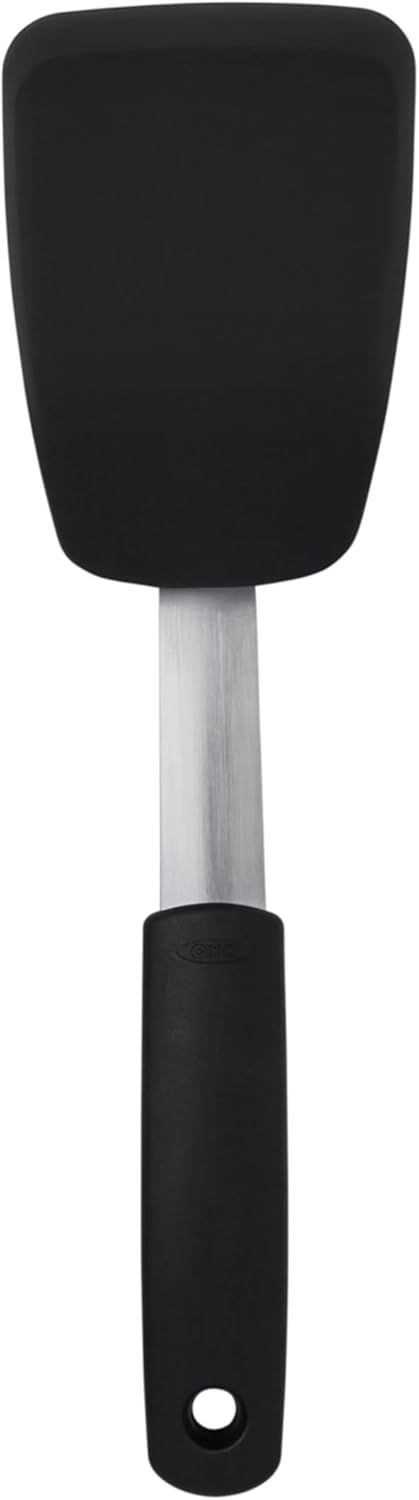
OXO Good Grips Silicone Spatula
OXO
- OXO Good Grips
- Silicone head
- Comfort handle
- Cookware-safe
Why we picked it: OXO's classic silicone spatula — the gold standard for nonstick care.
The Comparison Table
| Pick | Brand | Product | Key spec |
|---|---|---|---|
| Best Overall | AOTHOD | AOTHOD Silicone Cooking Utensils | 446°F heat resistant |
| Best Value | ChefAide | ChefAide Silicone Spatula Set | 5-piece set |
| Best Premium | OXO | OXO Good Grips Silicone Spatula | OXO Good Grips |
What to Look For
The PFOA scare was pre-2013. Older nonstick used PFOA (a carcinogen) in manufacturing. Post-2013 pans from major brands eliminated PFOA. Current PTFE coatings are inert — they don't react with food or digest.
Performance dies before safety becomes an issue. By the time you're worried about scratched coating, the pan has already stopped releasing food properly. The practical answer is always 'replace it' — for cooking quality, not chemistry.
How Nonstick Coatings Actually Fail
Understanding the failure sequence helps you judge how much life your pan has left. A PTFE coating doesn't go from perfect to dangerous — it degrades through predictable stages, and none of them is a health emergency.
Stage 1: Micro-abrasion. Thousands of tiny scratches from utensils, stacking, and scouring dull the surface. You can't see individual marks, but eggs start needing a little butter where they didn't before. This begins within months of daily use even with careful habits.
Stage 2: Visible scratching. Distinct lines you can see and feel with a fingernail. The coating around each scratch is thinner and food proteins bond to the exposed micro-texture, so sticking becomes localized — usually in the center where utensils work most.
Stage 3: Flaking and delamination. Flecks of coating appear in food or the pan shows bald patches of gray aluminum. The pan is still not toxic — swallowed PTFE fragments are inert and pass through — but at this point the exposed aluminum can react with acidic foods (tomato, wine, lemon) and give them a metallic taste. This is the unambiguous "replace it now" stage.
The timeline from new to Stage 3 is typically 2–5 years for a well-treated pan and under a year for one that sees metal spatulas, dishwasher cycles, and high heat. That's why we treat nonstick as a consumable — buy mid-priced, treat it gently, and expect to replace it — rather than a lifetime purchase like cast iron or stainless.
Does the Answer Change for Ceramic Nonstick?
Slightly. "Ceramic" nonstick (sol-gel coatings like Thermolon or GreenPan's coating) contains no PTFE at all, so the scratch question is even less of a health issue — there's no fluoropolymer to flake. The trade-off is durability: sol-gel coatings lose their release properties faster than PTFE, often within 12–18 months, and scratches accelerate that decline the same way.
Two practical differences worth knowing. First, ceramic coatings are more brittle: a drop or a thermal shock (hot pan under cold tap) can craze the surface with hairline cracks that look alarming but remain harmless. Second, ceramic tolerates slightly higher heat before degrading, but its nonstick performance still dies fastest with high-heat habits. Whichever chemistry you own, the operating rule is identical: medium heat, soft utensils, hand wash.
How to Make Your Next Pan Last Three Times Longer
Since replacement is inevitable, the real money-saver is stretching the interval. Five habits do almost all of the work:
Keep it under medium heat. PTFE begins to degrade measurably above 500°F, but the practical damage starts earlier — repeated 400°F+ sessions bake oils into a varnish that ruins release. Nonstick is for eggs, fish, pancakes, and reheating; searing belongs to carbon steel or stainless.
Skip the spray oils. Aerosol sprays contain lecithin that polymerizes into a sticky film at low temperatures; it's the number-one cause of "my new pan already sticks." Use a small amount of butter or oil applied with a paper towel.
Hand wash, always. Dishwasher detergent is abrasive and the rack knocks the rim against other items. Thirty seconds with a soft sponge is all a nonstick pan ever needs.
Store with a pan protector. Stacking bare pans is how most deep gouges happen — not cooking. A felt divider or even a paper towel between stacked pans eliminates it.
Let it cool before rinsing. Thermal shock warps thin aluminum bodies and micro-cracks coatings. A warped pan rocks on the burner, heats unevenly, and wears its center out faster.
Buyer Scenario Decision Matrix
Stop comparing specs. Start with what you're actually doing, then the right product is obvious:
| Your Situation | Buy This | Skip This | Why |
|---|---|---|---|
| Most people — daily use, no compromises | AOTHOD Silicone Cooking Utensils | Premium-only sets you won't grow into | 446°F heat resistant |
| Budget-conscious or first-time buyer | ChefAide Silicone Spatula Set | Premium upgrade you may not need yet | 5-piece set |
| Heavy daily use, splurge, or buy-once-keep-forever | OXO Good Grips Silicone Spatula | Cheaper sets — you'll outgrow them | OXO Good Grips |
Recommended Products
What we'd reach for: the AOTHOD Silicone Cooking Utensils. Prevent future scratches with full silicone tools rated to 446°F.
Budget alternative: the ChefAide Silicone Spatula Set. Premium silicone spatulas with rubber tips that won't scratch coatings.
If you want the upgrade: the OXO Good Grips Silicone Spatula. OXO's classic silicone spatula — the gold standard for nonstick care.
Ready to buy?
Jump straight to our top picks on Amazon — prices shown at click-through.
Frequently Asked Questions
What happens if I eat Teflon flakes?
Modern PTFE flakes pass through your digestive system unchanged — they're inert. They don't dissolve in stomach acid and aren't absorbed. The concern is overheating nonstick (>500°F), which releases fumes that can harm birds and cause flu-like symptoms in humans.
When should I throw out a scratched nonstick pan?
When food starts consistently sticking — typically once you can see deep scratches that catch a fingernail. At that point performance is shot regardless of safety. A new $40 pan beats fighting with a scratched one.
What's the best product to fix this?
We'd reach for the AOTHOD Silicone Cooking Utensils. Prevent future scratches with full silicone tools rated to 446°F.
How long does this take to fix?
Most solutions are 10-30 minutes of active work. Prevention takes 30 seconds per use.
Can I keep using a nonstick pan with metal showing through?
You can, but you shouldn't want to. Exposed aluminum reacts with acidic foods and gives them a metallic taste, and the surrounding coating will keep flaking. Once you see bald metal, retire the pan.
Is scratched ceramic nonstick safer than scratched PTFE?
Both are considered safe when scratched. Ceramic coatings contain no PTFE, so nothing fluoropolymer can flake, but they lose release properties even faster once scratched — same safety answer, shorter replacement timeline.
Do pan repair sprays or re-coating kits work?
No. Consumer nonstick repair sprays are silicone films that wash away within weeks. Professional re-coating costs more than a good new pan. Prevention with silicone utensils is the only fix that pays.
Want to dig deeper? See our guides to Best Nonstick Cookware Set (2026), When to Replace Your Nonstick Pan, and Are Nonstick Pans Safe?.