
“Is ceramic cookware safe?” is one of the most common kitchen questions, and the short answer is reassuring: reputable ceramic cookware is considered safe for everyday cooking, and it's specifically free of the PTFE and PFAS chemistry that drives most nonstick worry. The nuances worth understanding are which brand you buy and how long you keep cooking on a worn-out pan. Here's the plain-English version.
What you need to know
“Ceramic” nonstick isn't solid ceramic
Almost all “ceramic” cookware is a thin, silica-based (sol-gel) mineral coating bonded over an aluminum or hard-anodized body — not a solid fired-ceramic pan like an Xtrema. Both forms are generally considered safe to cook on; the coated kind is just lighter, slicker, and far more common. Knowing the difference helps you read the marketing honestly.
It's free of PTFE, PFOA, and PFAS
The main safety appeal is what ceramic coatings leave out: no PTFE (Teflon-type fluoropolymer), no PFOA, and no PFAS. That means the classic nonstick concern — fumes from an empty PTFE pan overheated past ~500°F — doesn't apply the same way. Reputable ceramic is inert at normal cooking temperatures.
Lead and cadmium: buy reputable brands
The real safety variable is manufacturing quality. Established brands (the kind featured here) formulate their coatings free of lead and cadmium and test for it. The documented risk cases come from cheap, unbranded imports and decorative glazed ceramics not meant for cooking. Buying a recognized cookware brand all but removes this concern.
The real issue is a worn-out coating
Ceramic nonstick degrades faster than PTFE — typically one to three years of regular use. A dull or lightly scratched coating isn't a major toxicity hazard, but once it stops releasing food or starts to flake, the pan has reached the end of its useful life. The honest guidance is to replace ceramic pans when the nonstick fails rather than cooking on a visibly degraded surface.
How to use it safely and make it last
Cook on low-to-medium heat, never use aerosol cooking spray (it bakes into a film that wrecks the coating), avoid metal utensils, hand-wash instead of using the dishwasher, and never preheat an empty pan. These habits both protect the coating and keep the pan performing the way it should — the safest ceramic pan is a well-maintained one you replace when it wears out.
Recommended Gear
The gear we'd reach for. Prices shown on Amazon at click-through.
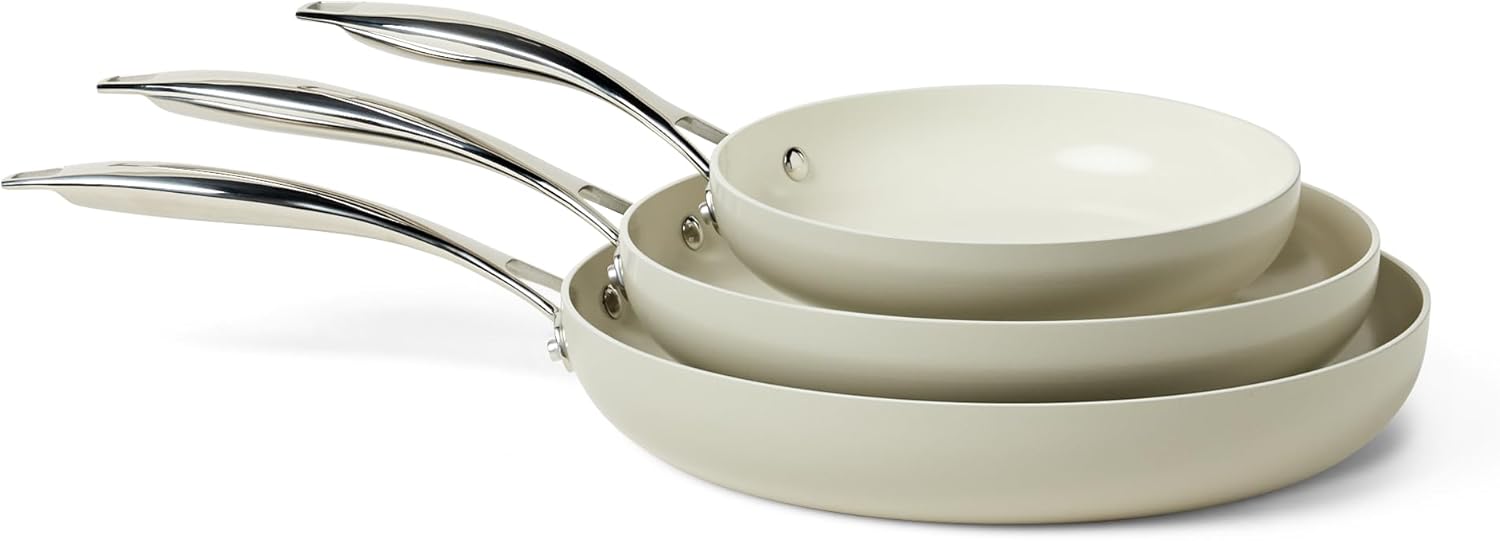
Amazon Basics Ceramic Nonstick 3-Piece Frying Pan Set
budget-friendly
An inexpensive way to skip fluoropolymers entirely — a PFAS-free ceramic fry-pan trio that's an easy, low-risk starting point.
Check Price on Amazon →
GreenPan Valencia Pro Ceramic Nonstick 3-Piece Fry Pan Set
premium tier
GreenPan's Thermolon ceramic is PFAS-free, hard-anodized for durability, and oven-safe to 600°F — a sturdier ceramic pick from an established brand.
Check Price on Amazon →Frequently Asked Questions
Is ceramic cookware safe to cook with every day?
Yes — reputable ceramic cookware is considered safe for daily cooking. It's free of PTFE, PFOA, and PFAS, and recognized brands test free of lead and cadmium. Use low-to-medium heat and replace the pan once the coating wears out.
Is ceramic cookware safer than Teflon?
Ceramic avoids fluoropolymer chemistry (PTFE/PFAS) entirely, which is why many buyers prefer it. Modern PTFE is PFOA-free and considered safe below about 500°F, but ceramic sidesteps that concern — at the cost of a shorter lifespan.
Want to dig deeper? See our guides to Best Ceramic Cookware (2026), Best Non-Toxic Cookware (2026), and Are Nonstick Pans Safe?.