

A flat-top griddle is bare steel, and seasoning is what turns that raw surface into a glossy, non-stick, rust-proof cooktop. It's the same idea as seasoning cast iron: thin layers of oil heated until they polymerize into a hard black coating. Get it right and eggs slide and the surface lasts for years; get it wrong (usually too much oil) and you get a sticky, blotchy mess. Here's exactly how to season a new Blackstone — and keep it seasoned after every cook.
Step-by-step
Wash a brand-new griddle once
A new griddle ships with a protective coating, so the very first time — and only the first time — scrub it with warm, soapy water to strip that film, then rinse and dry. After this, soap never touches the surface again, because washing a seasoned griddle would strip the finish you're about to build.
Dry it completely and heat it up
Towel-dry the steel, then turn all burners to high. As it heats, the surface will darken and may discolor in patches — that's normal. Wait until it stops smelling of factory oil and the color shifts toward brown/blue-gray, usually 10–15 minutes. A bone-dry, hot surface is essential before any oil goes on.
Apply a very thin layer of oil
Turn the heat down slightly, add a small amount of a high-smoke-point oil or a dedicated griddle seasoning, and spread it across the entire surface — including the edges and corners — with a wad of paper towel held in tongs. Then wipe it back off until the steel looks almost dry. Too much oil is the #1 mistake and causes a sticky, tacky finish.
Burn it in until the smoke stops
Crank the heat back up. The oil will smoke heavily, then the smoke will taper off as the layer bonds and turns from shiny to a dull bronze, then dark brown. Once the smoking stops, that layer is set. This is the polymerization that creates the non-stick coating.
Repeat for three to five thin layers
Do the thin-oil / wipe / burn-in cycle three to five times. Each pass darkens the surface and builds durability — by the last round the griddle should look uniformly dark and slightly glossy. Patience here pays off: thin layers stacked up are far tougher than one thick coat.
Maintain it after every cook
When you're done cooking, scrape food and grease to the trap while the griddle is still warm, wipe it with a paper towel, and rub on a thin coat of oil to protect it until next time. For stuck-on bits, add a little water to steam them loose, then scrape — never soap. This after-cook habit is what keeps the seasoning building instead of breaking down.
Recommended Gear
The gear we'd reach for. Prices shown on Amazon at click-through.

Blackstone 4146 Griddle Seasoning & Cast Iron Conditioner
budget-friendly
Blackstone's own blend of oils and waxes, formulated to build a hard, non-stick season faster than plain cooking oil.
Check Price on Amazon →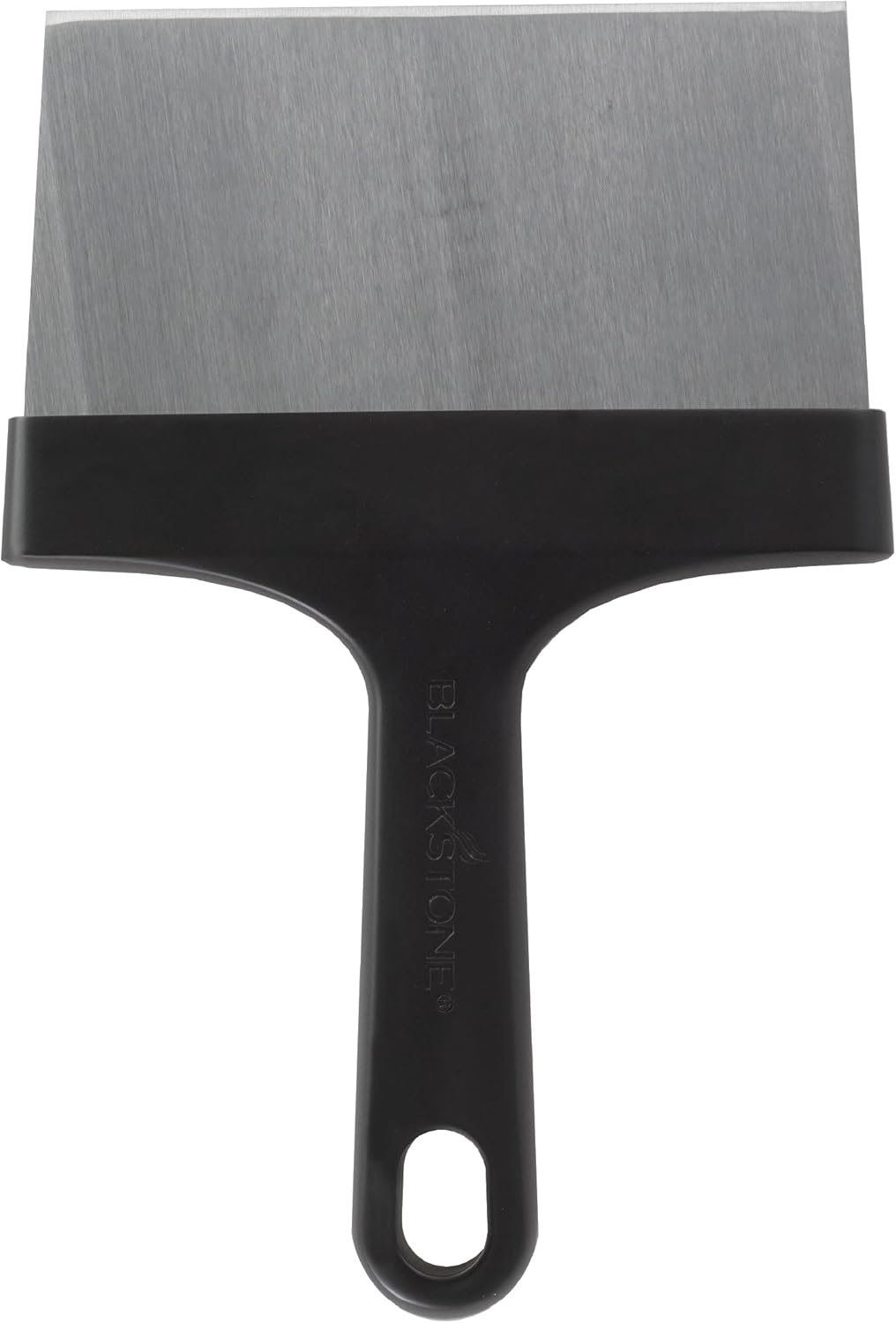
Blackstone Griddle Scraper (5061)
budget-friendly
The flat stainless scraper you use before and after every cook — clears food and pushes grease to the trap to protect the season.
Check Price on Amazon →Troubleshooting: Flaking, Rust, and Patchy Color
Seasoning flaking off in black chips. Flakes mean a layer went on too thick or bonded to grease instead of steel. Don't panic and don't strip the whole top: scrape the flaking zone aggressively with the flat scraper while hot, wipe clean, and rebuild that area with two or three properly thin coats. The chips themselves are harmless carbon — unappetizing, not dangerous.
Orange rust spots. Rust shows up wherever seasoning is thin and moisture sat — usually after rain, a wet cover, or a season in storage. While the griddle is warm, pour on a little oil and scrub the rust with a griddle stone or balled foil until you're back to gray steel, wipe the residue, then re-season just that area. Catch it early and it's a ten-minute fix; leave it a season and you may be stripping the whole surface.
Blotchy, uneven color. Normal, and mostly cosmetic. Burners sit in ovals under the plate, so the metal directly above them runs hotter, darkens faster, and cures oil harder. The lighter zones catch up as you cook. Judge a season by how eggs behave on it, not by how uniform it looks.
Dull gray patches after cooking acidic food. Tomatoes, citrus, wine, and vinegar-based sauces dissolve young seasoning. Avoid them for the first half-dozen cooks; once the surface is glossy black it shrugs them off. If a sauce does strip a patch, wipe a thin oil coat over it at the end of the cook and burn it in — one cycle usually repairs it.
Your First Cook on a Fresh Season
The first few cooks either reinforce your new seasoning or undo it, so choose fatty and choose gentle. Smash burgers, bacon, sausage, fried rice with plenty of oil — these baste the surface in fat and effectively add bonus seasoning layers while you cook. Save the delicate stuff (eggs, fish, pancakes) for cook three or four, and hold the acidic sauces for a few weeks. Two habits from day one: preheat gradually (cold-to-high warps steel plates over time — walk it up through medium), and use the scraper the moment you finish cooking, while everything's hot and loose. A well-run first month produces a surface most owners never have to strip again.
Griddle vs Cast Iron Seasoning: What's Different
If you already season cast iron, the chemistry here is identical — polymerized oil is polymerized oil — but three practical things change. First, you can't put a 36-inch griddle in the oven, so all curing happens on the burners, which is why the layer-by-layer burn-in matters more. Second, the griddle lives outdoors: humidity, rain, and temperature swings attack it in ways a kitchen skillet never faces, so the after-cook oil wipe and a fitted cover (with a wind gap so condensation escapes) do more for longevity than the initial seasoning itself. Third, rolled steel is smoother than cast iron, so it seasons faster and recovers faster — even a badly neglected top comes back with an hour and a griddle stone.
Frequently Asked Questions
What oil is best for seasoning a Blackstone griddle?
Use a thin oil with a high smoke point — canola, vegetable, grapeseed, avocado, or flaxseed — or a purpose-made griddle seasoning blend, which polymerizes faster and more evenly. Avoid olive oil and butter; their smoke points are too low to harden into a durable layer.
How many coats of seasoning does a new griddle need?
Three to five thin layers to start. Each one should be wiped almost dry and burned in until the smoke stops before you add the next. After the initial seasoning, every cook adds to it — so the surface keeps improving the more you use it.
Why is my Blackstone griddle sticky after seasoning?
Almost always too much oil. A thick coat cooks into a tacky, varnish-like film instead of a hard layer. Fix it by heating the griddle to burn off and harden the excess, scraping it smooth, then re-seasoning with a much thinner coat — wiped back until the steel looks nearly dry.
How do I keep a griddle from rusting?
Keep it seasoned and keep it dry. Always wipe a thin coat of oil on after cleaning, store it covered and out of the rain, and never leave it wet. If rust appears, scrub it off with a little oil and a pumice stone or scraper, then re-season that spot.
How do I season a Blackstone griddle for the first time?
Wash the brand-new griddle once with warm soapy water to strip the factory coating, dry it completely, then turn all burners to high. When the steel darkens and stops smelling of factory oil (about 10–15 minutes), turn the heat down slightly, rub a very thin layer of high-smoke-point oil or griddle seasoning over every inch, and wipe it back until it looks almost dry. Crank the heat back up and let it burn in until the smoke stops — that’s one layer bonded. Repeat three to five times for a durable, slick black surface.
How often should I season my Blackstone griddle?
After the initial 3–5 layers, you don’t do a full season again — every cook adds to it. The maintenance habit is what matters: while the griddle is still warm after cooking, scrape food and grease to the trap, wipe with a paper towel, and rub on a very thin coat of oil to protect it until next time. Only re-season fully if the surface gets damaged, rusts, or you strip it back to bare steel.
Can I cook on my Blackstone right after seasoning it?
Yes — as soon as the last layer has stopped smoking and the surface wipes dry, it's ready. The best first cooks are fatty ones (burgers, bacon); keep acidic sauces and delicate foods for later cooks.
Do I need to strip and re-season every year?
No. A maintained griddle never needs a full strip — that's only for widespread flaking, deep rust, or varnish you can't burn off. If the surface is dark and food releases well, routine cooking plus the after-cook oil wipe is the entire maintenance plan.
Want to dig deeper? See our guides to Best Flat-Top Griddles (2026), Best Grilling Tools (2026), and Griddle vs Grill: Which Should You Buy?.