

The best pizza most home ovens can produce isn't a floppy Neapolitan imitation — it's pan pizza, and a cast iron skillet is the ideal pan. Olive oil in the skillet fries the bottom crust, the iron's mass browns it evenly, and cheese pressed to the edge caramelizes into the lacy, crunchy rim Detroit-style fans call the frico crust. Store-bought dough works perfectly. No stone, no peel, no transfer anxiety — the skillet is the peel.
Ingredients
- 1 pound pizza dough, store-bought or homemade
- 2 tablespoons olive oil (for the skillet)
- 1/2 cup pizza sauce
- 8 oz low-moisture mozzarella, shredded (not fresh mozzarella)
- 1 oz parmesan, grated
- Toppings: pepperoni, cooked sausage, pickled jalapeños — go light
- Optional: dried oregano and red pepper flakes
Instructions
Let the dough warm and relax (60–90 minutes)
Cold dough is a rubber band — it fights you and springs back. Leave it covered at room temperature for 60–90 minutes until it's slack and stretchable. This is passive time; start it when you start thinking about dinner.
Oil the skillet and press the dough out
Coat a 10–12 inch skillet with the full 2 tablespoons of olive oil — it looks like a lot because it's going to fry the bottom of the crust. Press the dough outward with your fingertips to the edges. If it springs back stubbornly, walk away for 15 minutes and press again; it'll cooperate.
Optional second rise for a puffier crumb
For a lighter, more open pan-pizza crumb, cover the skillet and let the pressed dough puff for 30–45 minutes. In a rush, skip it — you'll get a denser but still excellent crust. Preheat the oven to 500°F with a rack in the lower third.
Top it: cheese to the very edge
Sauce lightly, leaving no rim — then take the mozzarella all the way to the skillet wall, letting it touch the iron. That contact zone becomes the frico edge: cheese that fries against the pan into a crisp, lacy crown. Finish with parmesan and restrained toppings; pan pizza drowns under a heavy hand.
Bake 12–15 minutes at 500°F
Bake on the lower rack until the cheese is blistered and the edge is deeply browned, 12–15 minutes. The lower rack position biases heat into the skillet base, which is exactly where you want it.
Finish 2–3 minutes on the stovetop
Here's the move that separates good from great: set the skillet over medium heat for 2–3 minutes. Lift an edge with a spatula and watch the bottom go from golden to fried-crisp brown. Cast iron makes this possible — the pizza never leaves the pan.
Rest 3 minutes, then loosen and slice
Rest briefly, run a thin spatula around the edge to free the frico, and slide the whole pizza onto a board. Slice with a pizza wheel or rocker — cutting in the pan carves up your seasoning. It should sound crunchy under the cutter.
Recommended Gear
The gear we'd reach for. Prices shown on Amazon at click-through.

Norpro Stainless Steel Bench Scraper/Chopper
budget
Divides pizza dough cleanly and scrapes the floured counter down in one pass when you're shaping skillet pies.
Check Price on Amazon →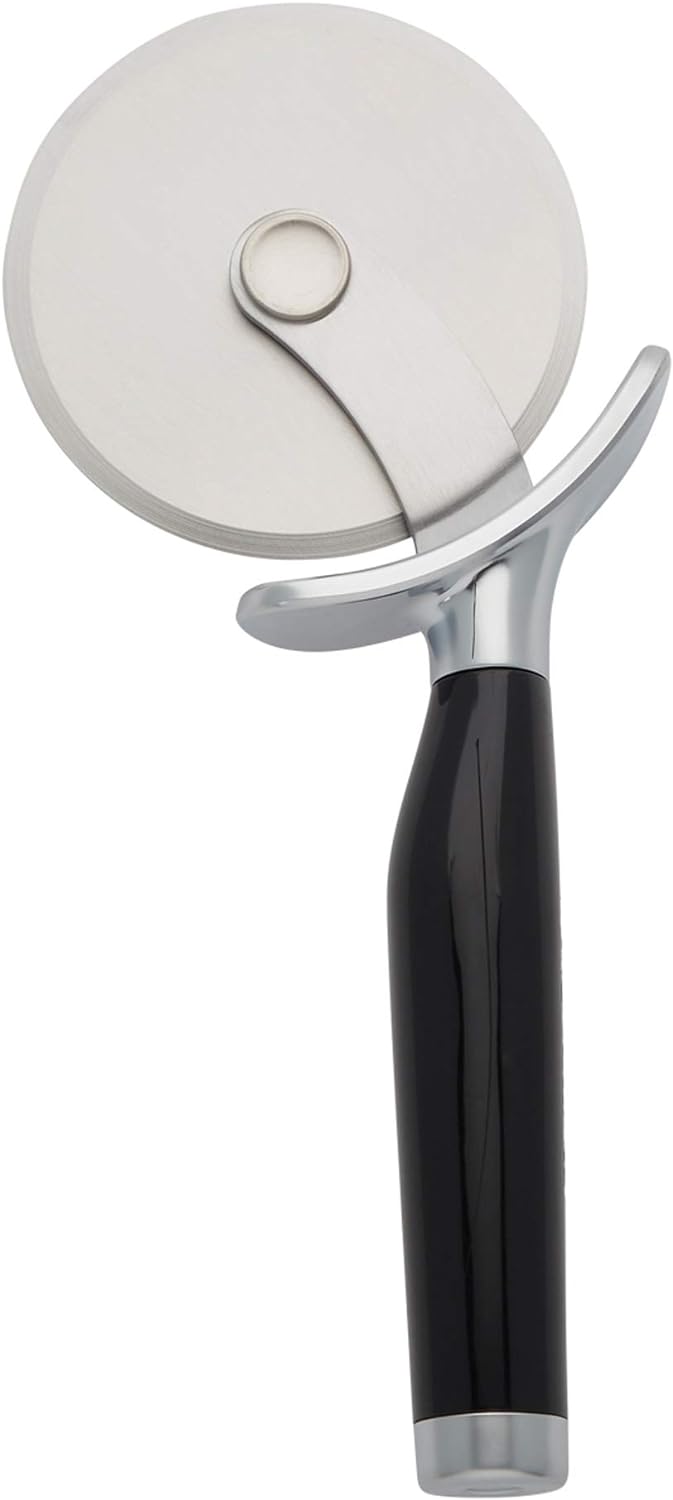
KitchenAid Classic Pizza Wheel, 9-Inch
mid-range
A sharp roller wheel cuts through a thick, crispy cast-iron crust without dragging the melted cheese with it.
Check Price on Amazon →Why cast iron is the best pizza 'stone' you own
Home ovens top out around 500–550°F — half a pizza oven's heat — so the crust needs help from below. A pizza stone provides stored heat, but a cast iron skillet does the same job with three advantages: it holds comparable thermal mass, its walls contain oil so the crust fries rather than just bakes (the signature of pan pizza from Pizza Hut nostalgia to Detroit squares), and it moves to the stovetop, where you can directly finish the bottom to order — no stone can do that. The frico edge is pure contact chemistry: cheese against 450°F iron loses its moisture and browns into a crisp wall. If you're set on thin, launched pies instead, that's a pizza stone or baking steel project — different pizza, different tools.
Dough strategy: store-bought is genuinely fine
Pan pizza is the most forgiving format in pizza — the oil-fried bottom and cheese edge carry so much flavor and texture that the dough just needs to be decent. Grocery-store dough balls and pizzeria takeout dough both work beautifully; the only non-negotiable is the room-temperature rest so it presses out without fighting. If you do make dough, a slightly wet, no-knead overnight dough (about 70% hydration) develops flavor in the fridge for up to 3 days and shines in this format. Two traps to skip: fresh mozzarella (too wet — it pools water and kills the crisp; low-moisture blocks are correct here) and overloading toppings, which steam the center. And mind your skillet afterward: tomato sauce is acidic, so don't let leftover sauce sit in the pan — clean it warm and re-oil, per our seasoning guide.
Toppings that survive the pan (and the sauce question)
Pan pizza punishes overloading more than any other style — the crust is frying from below, and everything you pile on top fights that with steam. The reliable rule: one meat, one vegetable, applied sparsely. Pepperoni is the format's best friend (it crisps into cups and its rendered fat flavors the cheese); cooked crumbled sausage, pickled jalapeños, and thin red onion all work because they carry little water. The traps: fresh tomato slices, raw mushrooms, and fresh mozzarella — all water bombs that pool in the center. Mushrooms want a 3-minute pre-sauté; fresh basil goes on after the bake, not before. On sauce: less than feels right — a half cup, spread thin — and consider the Detroit move of saucing over the cheese in two racing stripes, which keeps the dough drier and bakes the sauce into something concentrated. A no-cook sauce (crushed San Marzanos, pinch of salt, glug of olive oil) beats simmered jarred sauce here because it brightens during the bake instead of going flat. And once a month, make the bar-pie version: no sauce at all, garlic butter on the dough, mozzarella, pickled peppers, and a parmesan shower at the end — it's the fastest route this site knows to understanding why the skillet earns permanent stove residency.
Frequently Asked Questions
What temperature do you cook cast iron pizza?
500°F oven, lower rack, 12–15 minutes — then 2–3 minutes on a medium stovetop burner to finish the bottom to fried-crisp. That two-stage finish is the advantage cast iron has over any stone.
Can I use store-bought dough for skillet pizza?
Absolutely — pan pizza flatters cheap dough. Just let it sit at room temperature for 60–90 minutes first so it presses out easily, and press rather than stretch it into the oiled skillet.
Why is my pizza stuck to the skillet?
Not enough oil, or cheese/sauce leaked under the dough. Use the full 2 tablespoons, keep the sauce on top of the dough, and run a thin spatula around the frico edge before lifting — the cheese rim welds lightly to the wall by design.
Will tomato sauce damage my cast iron seasoning?
A 15-minute bake on top of a dough barrier? No. Acidic sauce sitting in direct contact with the iron for hours? That can dull seasoning. Clean the pan reasonably soon after dinner, dry it on the burner, and wipe with oil.
Can I make this with pre-shredded cheese?
Yes — pan pizza is one place the anti-caking starch in bagged shreds barely matters, since you want the cheese to brown hard anyway. Block low-moisture mozzarella melts a touch creamier if you're choosing.
Want to dig deeper? See our guides to Cast Iron Skillet Recipes: What the Pan Does Best, Best Cast Iron Skillet (2026), Best Pizza Stone (2026), and Cast Iron Skillet Steak (The Steakhouse Crust Method).