

Quick Answer
The best meat slicer for most home cooks is the Cuisinart FS-75 Kitchen Pro Food Slicer — 7.5" blade + 130W motor + tool-free disassembly for cleaning — the home-kitchen sweet spot. On a tighter budget, the Chefman Electric Meat Slicer with 7.5" Stainless Steel Blade delivers most of the same performance for less.
A meat slicer turns a $30 brisket into a week of sandwiches and a $40 ribeye into Sunday meal-prep dinner. The trick is buying one with a serrated blade option and enough motor to slice frozen-cold meat without bogging down. Here are the three we'd buy.
How We Picked These
For this meat slicer guide, we applied the framework laid out in our Editorial Policy: we evaluate materials and construction first, then weight long-term durability heavily — six-month and one-year owner-review patterns matter more than first-week impressions. We screened out products with documented reliability complaints, missing or hard-to-claim warranty support, and no-name brands without long-term service infrastructure. The picks below are the ones we'd recommend to a friend.
1. Best Overall: Cuisinart FS-75 Kitchen Pro Food Slicer

Cuisinart FS-75 Kitchen Pro Food Slicer
Cuisinart
- 7.5" stainless steel blade
- 130W motor
- Tool-free disassembly for cleaning
- Cast aluminum housing
Why we picked it: 7.5" blade + 130W motor + tool-free disassembly for cleaning — the home-kitchen sweet spot.
2. Best Value: Chefman Electric Meat Slicer with 7.5" Stainless Steel Blade

Chefman Electric Meat Slicer with 7.5" Stainless Steel Blade
Chefman
- 7.5" interchangeable blades (smooth + serrated)
- 200W motor
- Adjustable thickness dial
- Non-slip feet
Why we picked it: Two interchangeable blades (smooth + serrated) at a budget-friendly price — versatile starter slicer.
3. Best Premium: BESWOOD 10" Premium Chromium-Plated Carbon Steel Blade Electric Deli Meat Slicer
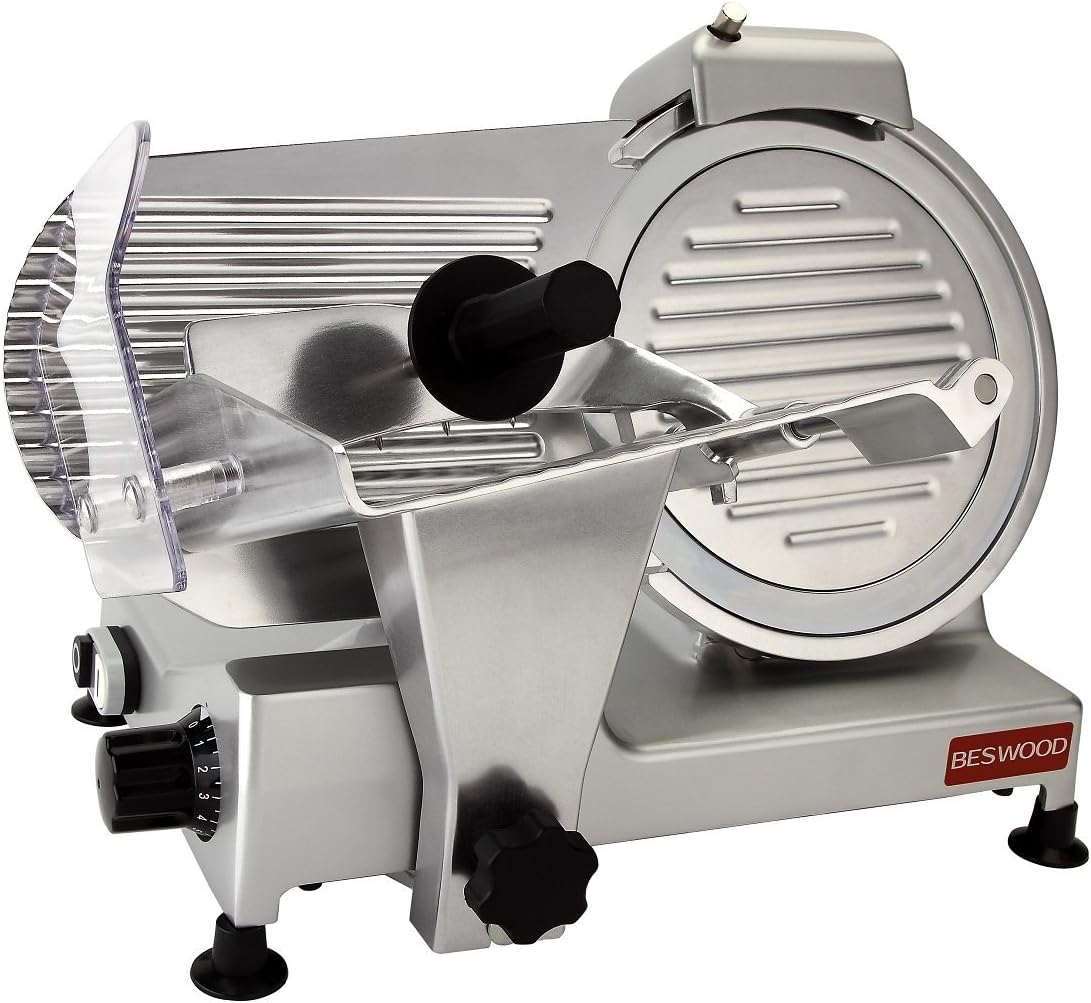
BESWOOD 10" Premium Chromium-Plated Carbon Steel Blade Electric Deli Meat Slicer
BESWOOD
- 10" chromium-plated blade
- 250W belt-driven motor
- Commercial-grade build
- Slices whole roasts
Why we picked it: Commercial-grade slicer for home use — 10" blade, 250W motor, the heavy-duty pick for serious slicing.
The Comparison Table
| Pick | Brand | Product | Key spec |
|---|---|---|---|
| Best Overall | Cuisinart | Cuisinart FS-75 Kitchen Pro Food Slicer | 7.5" stainless steel blade |
| Best Value | Chefman | Chefman Electric Meat Slicer with 7.5" Stainless Steel Blade | 7.5" interchangeable blades (smooth + serrated) |
| Best Premium | BESWOOD | BESWOOD 10" Premium Chromium-Plated Carbon Steel Blade Elect... | 10" chromium-plated blade |
What to Look For
Blade size dictates what you can slice. 7-inch blades handle deli meats and cheese — fine for most home use. 9–10 inch blades handle a full ham or roast — needed if you slice whole proteins regularly. Bigger isn't always better; the larger units take more counter space and clean up slower.
Motor power matters for frozen-cold slicing. The deli trick is freezing meat for 90 minutes before slicing — firmer, thinner slices. A weak motor (sub-150W) bogs down on cold meat; a stronger unit (200W+) handles it without complaint. The BESWOOD's 250W is the heavy-use pick.
Serrated blade option doubles versatility. Smooth blades handle cooked meat and cheese. Serrated blades cut bread, hard salami, and frozen meat without the smooth blade's risk of tearing. Models that let you swap blades (Cuisinart Food Slicer, BESWOOD) cover both jobs.
Blade size, drive type, and duty cycle: where the price goes
Three specs explain the spread from a $70 slicer to the $400 BESWOOD. Blade diameter sets what fits: 7-7.5 inches (Cuisinart, Chefman) handles deli meat, cheese, bread, and vegetables comfortably; a 10-inch blade like the BESWOOD's is what you need for a whole brisket, large roasts, or a home charcuterie program. Drive type matters more than wattage — belt-driven consumer slicers are quieter and cheaper but slip under sustained load, while gear-driven commercial-style machines hold blade speed through dense frozen-edge meat.
Duty cycle is the spec nobody publishes clearly and everybody discovers. Consumer slicers are designed for 10-20 minutes of continuous use before the motor needs to rest; push through a whole pork shoulder in one session and you'll smell it. If your use case is slicing a pound of turkey breast on Sundays, that limit never bites and the Cuisinart is plenty of machine. If you're portioning bulk meat from a chest freezer or processing game, the commercial-grade motor is the actual product you're buying. Blade material follows the same logic: chromium-plated carbon steel takes and holds a keener edge than stainless but demands drying immediately, since it will rust.
Getting deli-thin slices at home
The professional secret is temperature, not skill. Meat at refrigerator temperature squishes and tears; meat firmed in the freezer for 30-60 minutes — cold and stiff but not frozen solid — slices into sheets you can see through. Home cooks who complain their slicer "can't do deli thin" are almost always slicing warm meat. The same rule applies to cheese, and it's why soft mozzarella will never behave and firm provolone will. Slice on the day you'll eat it, since paper-thin slices oxidize and dry fast in the fridge.
Technique is a rhythm: let the carriage do the work with a smooth, unhurried stroke, keep steady but light pressure on the food with the guard, and never rush the return. Rushing produces ragged edges and is precisely when accidents happen. Trim the roast into a squared-off block first so the face contacts the blade evenly, and against-the-grain orientation still matters — a slicer cuts what you present to it, so a brisket loaded the wrong way makes stringy slices no matter the thickness dial. Bulk sessions freeze beautifully with parchment between slices, and a vacuum sealer turns a Sunday's work into months of sandwich meat. For hand-slicing large cuts instead, see the brisket knife guide.
Cleaning and safety: the routine that keeps the machine (and your fingers) intact
A meat slicer is the most dangerous tool most home kitchens own, and it earns that title during cleaning, not slicing. The blade is fully exposed once the guard comes off, it's razor sharp along its entire circumference, and it looks harmless sitting still. The non-negotiables: unplug before any disassembly (not just "off"), wear a cut-resistant glove for blade handling, wash the blade as a separate object with a brush — never a hand-held sponge sliding along the edge — and never put a slicer blade into a sink of soapy water where it disappears from view. Set the thickness to zero when storing so no edge protrudes.
Food safety demands the same discipline. Slicers are a known listeria vector in commercial settings precisely because raw juices collect in the carriage tracks and behind the blade guard where a wipe-down misses. Break the machine down after every session with raw meat: blade off, guard off, carriage off, hot soapy water, sanitize with a diluted bleach or food-safe sanitizer solution, and dry every part before reassembly — especially with carbon-steel blades, which rust within hours. Between light uses, a wipe and a dry is enough; after raw poultry or pork, it's the full teardown, no exceptions. Our step-by-step slicer guide walks the whole operating routine.
Buyer Scenario Decision Matrix
Stop comparing specs. Start with what you're actually doing, then the right product is obvious:
| Your Situation | Buy This | Skip This | Why |
|---|---|---|---|
| Most people — daily use, no compromises | Cuisinart FS-75 Kitchen Pro Food Slicer | Premium-only sets you won't grow into | 7.5" stainless steel blade |
| Budget-conscious or first-time buyer | Chefman Electric Meat Slicer with 7.5" Stainless Steel Blade | Premium upgrade you may not need yet | 7.5" interchangeable blades (smooth + serrated) |
| Heavy daily use, splurge, or buy-once-keep-forever | BESWOOD 10" Premium Chromium-Plated Carbon Steel Blade Electric Deli Meat Slicer | Cheaper sets — you'll outgrow them | 10" chromium-plated blade |
Bottom Line: Which Should You Buy?
For most people: the Cuisinart FS-75 Kitchen Pro Food Slicer. 7.5" blade + 130W motor + tool-free disassembly for cleaning — the home-kitchen sweet spot.
On a budget: the Chefman Electric Meat Slicer with 7.5" Stainless Steel Blade. Two interchangeable blades (smooth + serrated) at a budget-friendly price — versatile starter slicer.
Worth the splurge: the BESWOOD 10" Premium Chromium-Plated Carbon Steel Blade Electric Deli Meat Slicer. Commercial-grade slicer for home use — 10" blade, 250W motor, the heavy-duty pick for serious slicing.
Ready to buy?
Jump straight to our top picks on Amazon — prices shown at click-through.
Frequently Asked Questions
What's the best meat slicer for home use?
The Cuisinart Food Slicer is the home-use sweet spot: 7.5" blade, 130W motor, dual-blade option, $200 range. The Chefman is the budget pick. The BESWOOD 250 is the splurge for anyone who slices whole proteins weekly — commercial-grade build at a home price.
Can you slice meat without freezing it first?
Yes, but the slices will be thicker and less uniform. The 90-minute partial freeze is what gives you deli-counter thinness without tearing. For everyday use, fresh meat slices at about 1/8" thickness reliably. For paper-thin shaving (carpaccio, prosciutto-style), partial freeze is required.
How do you clean a meat slicer?
Always unplug first. Remove the blade carefully using the locking mechanism — never wash blades with sponges or bare hands. Soak the blade in hot soapy water, scrub with a brush, dry thoroughly. The carriage and chute wipe clean with a damp cloth. Sanitize with a food-safe spray after meat or before cheese.
What is the top-rated meat slicer for 2026?
Our top-rated pick is the Cuisinart FS-75 Kitchen Pro Food Slicer. 7.5" blade + 130W motor + tool-free disassembly for cleaning — the home-kitchen sweet spot.
Which meat slicer is best for beginners or a tighter budget?
The best-rated value pick is the Chefman Electric Meat Slicer with 7.5" Stainless Steel Blade — Two interchangeable blades (smooth + serrated) at a budget-friendly price — versatile starter slicer.
What's the best meat slicer for home use?
The Cuisinart FS-75 is the home sweet spot — 7.5" blade, 130W motor, tool-free disassembly. The Chefman is the budget pick with interchangeable smooth/serrated blades. The BESWOOD 250 is the splurge for daily use.
How do you get deli-thin slices with a home meat slicer?
Chill the meat first — 30 to 60 minutes in the freezer until firm but not frozen solid. Refrigerator-temperature meat squishes and tears; cold, stiff meat slices into translucent sheets. Square off the roast so it meets the blade evenly, and let the carriage do the work with slow, even strokes.
How do you clean a meat slicer safely?
Unplug it first — not just switch it off — and wear a cut-resistant glove. Remove the blade, guard, and carriage; wash the blade as a separate object with a brush, never a sponge sliding along the edge, and never in a sink of opaque soapy water. Sanitize, dry fully (carbon-steel blades rust fast), and store with the thickness set to zero.
Want to dig deeper? See our guides to How to Use a Meat Slicer, Best Knife Set (2026), and Best Vacuum Sealer (2026).