

Quick Answer
The best japanese knife for most home cooks is the Tojiro DP Gyuto 8.2" Chef's Knife (VG-10) — The gold-standard starter Japanese knife — VG-10 steel, excellent geometry, half the price of premium options. On a tighter budget, the Yoshihiro VG-10 16-Layer Damascus Gyuto 8.25" delivers most of the same performance for less.
Japanese knives — specifically the gyuto, Japan's answer to the chef's knife — cut differently than German blades. The steel is harder, the edge thinner, the grind asymmetric. For someone who appreciates the difference, there's no going back. Here are the three we'd buy.
How We Picked These
For this japanese knife guide, we applied the framework laid out in our Editorial Policy: we evaluate materials and construction first, then weight long-term durability heavily — six-month and one-year owner-review patterns matter more than first-week impressions. We screened out products with documented reliability complaints, missing or hard-to-claim warranty support, and no-name brands without long-term service infrastructure. The picks below are the ones we'd recommend to a friend.
1. Best Overall: Tojiro DP Gyuto 8.2" Chef's Knife (VG-10)
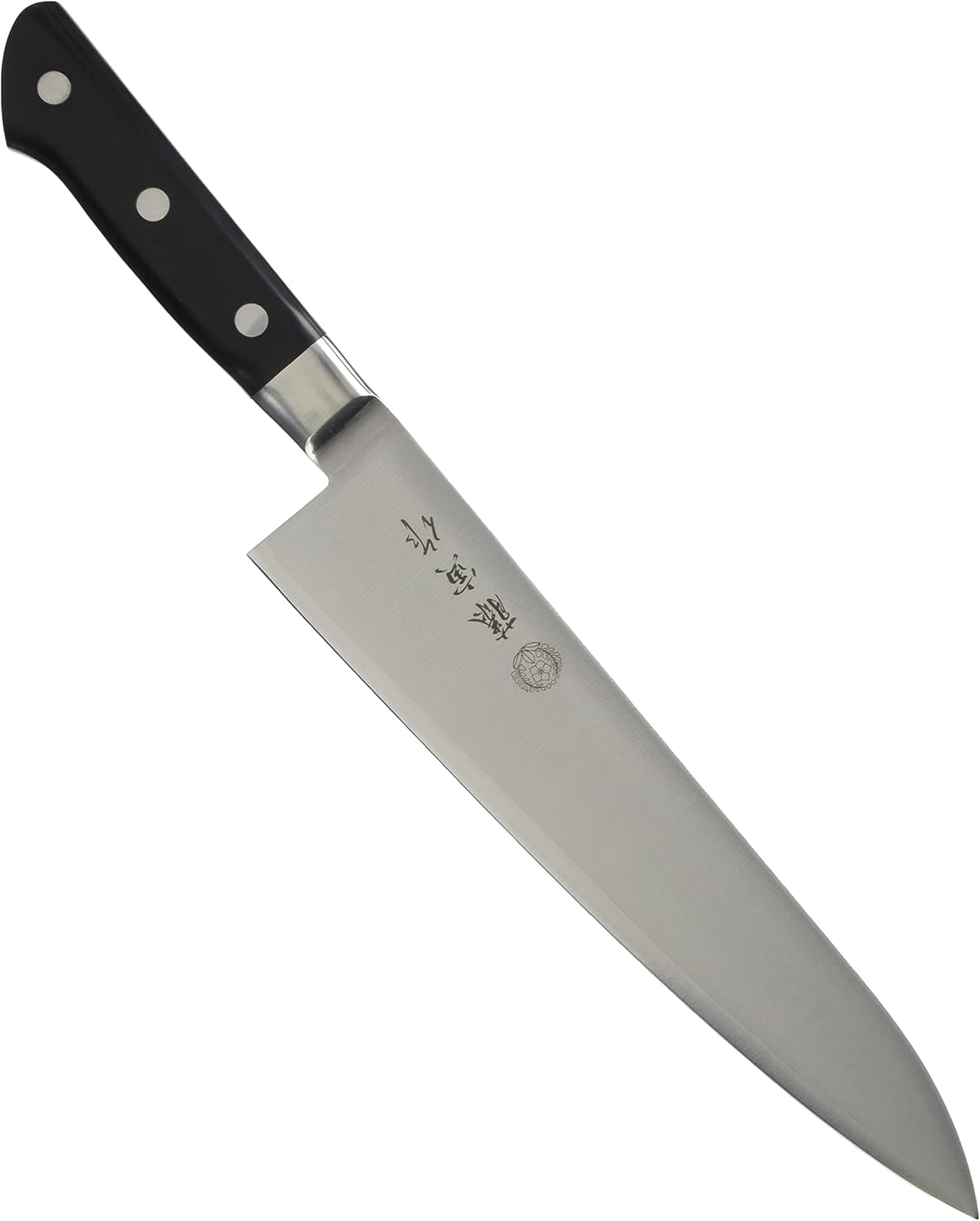
Tojiro DP Gyuto 8.2" Chef's Knife (VG-10)
Tojiro
- VG-10 core steel — holds an edge longer than German steel
- 8.2" gyuto — Japanese chef knife
- Composite resin handle
- Made in Japan
Why we picked it: The gold-standard starter Japanese knife — VG-10 steel, excellent geometry, half the price of premium options.
2. Best Value: Yoshihiro VG-10 16-Layer Damascus Gyuto 8.25"

Yoshihiro VG-10 16-Layer Damascus Gyuto 8.25"
Yoshihiro
- VG-10 core with 16-layer Damascus
- Octagonal magnolia wood handle
- 8.25" Japanese gyuto
- Hand-finished in Japan
Why we picked it: Step-up Japanese gyuto with hammered Damascus pattern — more refined finish, same VG-10 cutting performance.
3. Best Premium: MIYABI Miyabi Birchwood SG2 9.5" Chef's Knife

Miyabi Birchwood SG2 9.5" Chef's Knife
MIYABI
- SG2 powdered steel core — extremely hard, sharpest edge
- Karelian Birchwood handle
- 100-layer Damascus
- Hand-finished in Seki, Japan
Why we picked it: Top-tier Japanese knife from Henckels' Miyabi line — SG2 powdered steel, hand-finished Birchwood handle.
The Comparison Table
| Pick | Brand | Product | Key spec |
|---|---|---|---|
| Best Overall | Tojiro | Tojiro DP Gyuto 8.2" Chef's Knife (VG-10) | VG-10 core steel — holds an edge longer than German steel |
| Best Value | Yoshihiro | Yoshihiro VG-10 16-Layer Damascus Gyuto 8.25" | VG-10 core with 16-layer Damascus |
| Best Premium | MIYABI | Miyabi Birchwood SG2 9.5" Chef's Knife | SG2 powdered steel core — extremely hard, sharpest edge |
What to Look For
Steel grade is the headline. VG-10, AUS-10, and SG2 are the three most common Japanese stainless steels. VG-10 (Tojiro DP, Yoshihiro) holds a sharp edge longer than German steel but takes more skill to sharpen. SG2 (Miyabi) is harder still — holds an even sharper edge but requires specialty stones to maintain.
Edge angle is sharper than German. Japanese gyutos are typically ground to 12–15° per side, vs 20° on German chef knives. That sharper angle slices more cleanly through delicate ingredients (fish, vegetables, herbs) but chips if you use the knife on bones or frozen food. Treat it gently.
Damascus is mostly cosmetic. The visible wavy pattern on knives like the Yoshihiro VG-10 16-Layer Damascus is layered steel — beautiful but adds little to cutting performance. The underlying cutting edge is what does the work. Pay for steel grade, not for Damascus layers.
Buyer Scenario Decision Matrix
Stop comparing specs. Start with what you're actually doing, then the right product is obvious:
| Your Situation | Buy This | Skip This | Why |
|---|---|---|---|
| Most people — daily use, no compromises | Tojiro DP Gyuto 8.2" Chef's Knife (VG-10) | Premium-only sets you won't grow into | VG-10 core steel — holds an edge longer than German steel |
| Budget-conscious or first-time buyer | Yoshihiro VG-10 16-Layer Damascus Gyuto 8.25" | Premium upgrade you may not need yet | VG-10 core with 16-layer Damascus |
| Heavy daily use, splurge, or buy-once-keep-forever | MIYABI Miyabi Birchwood SG2 9.5" Chef's Knife | Cheaper sets — you'll outgrow them | SG2 powdered steel core — extremely hard, sharpest edge |
Bottom Line: Which Should You Buy?
For most people: the Tojiro DP Gyuto 8.2" Chef's Knife (VG-10). The gold-standard starter Japanese knife — VG-10 steel, excellent geometry, half the price of premium options.
On a budget: the Yoshihiro VG-10 16-Layer Damascus Gyuto 8.25". Step-up Japanese gyuto with hammered Damascus pattern — more refined finish, same VG-10 cutting performance.
Worth the splurge: the MIYABI Miyabi Birchwood SG2 9.5" Chef's Knife. Top-tier Japanese knife from Henckels' Miyabi line — SG2 powdered steel, hand-finished Birchwood handle.
Ready to buy?
Jump straight to our top picks on Amazon — prices shown at click-through.
Frequently Asked Questions
What's the best Japanese knife for beginners?
The Tojiro DP gyuto is the gold-standard starter Japanese knife: VG-10 steel, excellent geometry, around half the price of premium options. The Yoshihiro VG-10 Damascus is the next step up for someone who wants a more refined finish. The Miyabi Birchwood SG2 is the splurge — SG2 steel and a hand-finished birchwood handle.
Are Japanese knives better than German?
For most home cooks doing most tasks, no — they're different, not better. German knives (Wüsthof, Henckels) are more forgiving of misuse and easier to sharpen. Japanese knives slice more cleanly but chip if you hit a bone. Buy Japanese if you appreciate the geometry and can treat it gently; stick with German if you abuse your knives.
How do you sharpen a Japanese knife?
On a whetstone, not a steel. The hard Japanese steels respond well to 1000-grit stones for everyday touch-ups and 6000-grit for finishing. Avoid pull-through sharpeners — they're calibrated for German steel and remove too much material from Japanese blades. A good whetstone setup pays for itself over years.
What is the top-rated japanese knife for 2026?
Our top-rated pick is the Tojiro DP Gyuto 8.2" Chef's Knife (VG-10). The gold-standard starter Japanese knife — VG-10 steel, excellent geometry, half the price of premium options.
Which japanese knife is best for beginners or a tighter budget?
The best-rated value pick is the Yoshihiro VG-10 16-Layer Damascus Gyuto 8.25" — Step-up Japanese gyuto with hammered Damascus pattern — more refined finish, same VG-10 cutting performance.
Are Japanese knives better than German?
Different, not better. Japanese knives (Tojiro, Yoshihiro, Miyabi) slice more cleanly with sharper edge angles (12–15° vs 20° on German). They chip if you hit a bone or cut frozen food. Buy Japanese if you appreciate the geometry and can treat it gently; stick with German if you abuse your knives.
How do you sharpen a Japanese knife?
On a whetstone, not a pull-through sharpener. The hard Japanese steels (VG-10, SG2) respond well to 1000-grit stones for everyday touch-ups and 6000-grit for finishing. Pull-through sharpeners are calibrated for German steel and remove too much material from Japanese blades.
Want to dig deeper? See our guides to Best Chef's Knife (2026), Wüsthof vs Shun: Which Chef's Knife Should You Buy?, and How to Sharpen a Chef's Knife.