

Quick Answer
The best espresso machine for most home cooks is the Breville Barista Express Espresso Machine BES870XL, Brushed Stainless Steel — The Barista Express remains the all-in-one benchmark: integrated conical burr grinder, 15-bar pump, and a forgiving steam wand on one footprint. On a tighter budget, the Gaggia RI9380/46 Classic Evo Pro Espresso Machine, Brushed Stainless Steel delivers most of the same performance for less.
Real home espresso means good crema, steamed milk that doesn't taste like skim, and the ability to dial in shots that don't taste like burnt motor oil. Here are three machines that get you there at three price points.
How We Picked These
For this espresso machine guide, we applied the framework laid out in our Editorial Policy: we evaluate materials and construction first, then weight long-term durability heavily — six-month and one-year owner-review patterns matter more than first-week impressions. We screened out products with documented reliability complaints, missing or hard-to-claim warranty support, and no-name brands without long-term service infrastructure. The picks below are the ones we'd recommend to a friend.
1. Best Overall: Breville Barista Express Espresso Machine BES870XL, Brushed Stainless Steel

Breville Barista Express Espresso Machine BES870XL, Brushed Stainless Steel
Breville
- Integrated stainless steel conical burr grinder with 1/2 lb hopper
- 15-bar Italian pump and 1600W thermocoil heating
- 54mm portafilter with single and dual wall filter baskets
- Manual steam wand for milk texturing
Why we picked it: The Barista Express remains the all-in-one benchmark: integrated conical burr grinder, 15-bar pump, and a forgiving steam wand on one footprint.
2. Best Value: Gaggia RI9380/46 Classic Evo Pro Espresso Machine, Brushed Stainless Steel
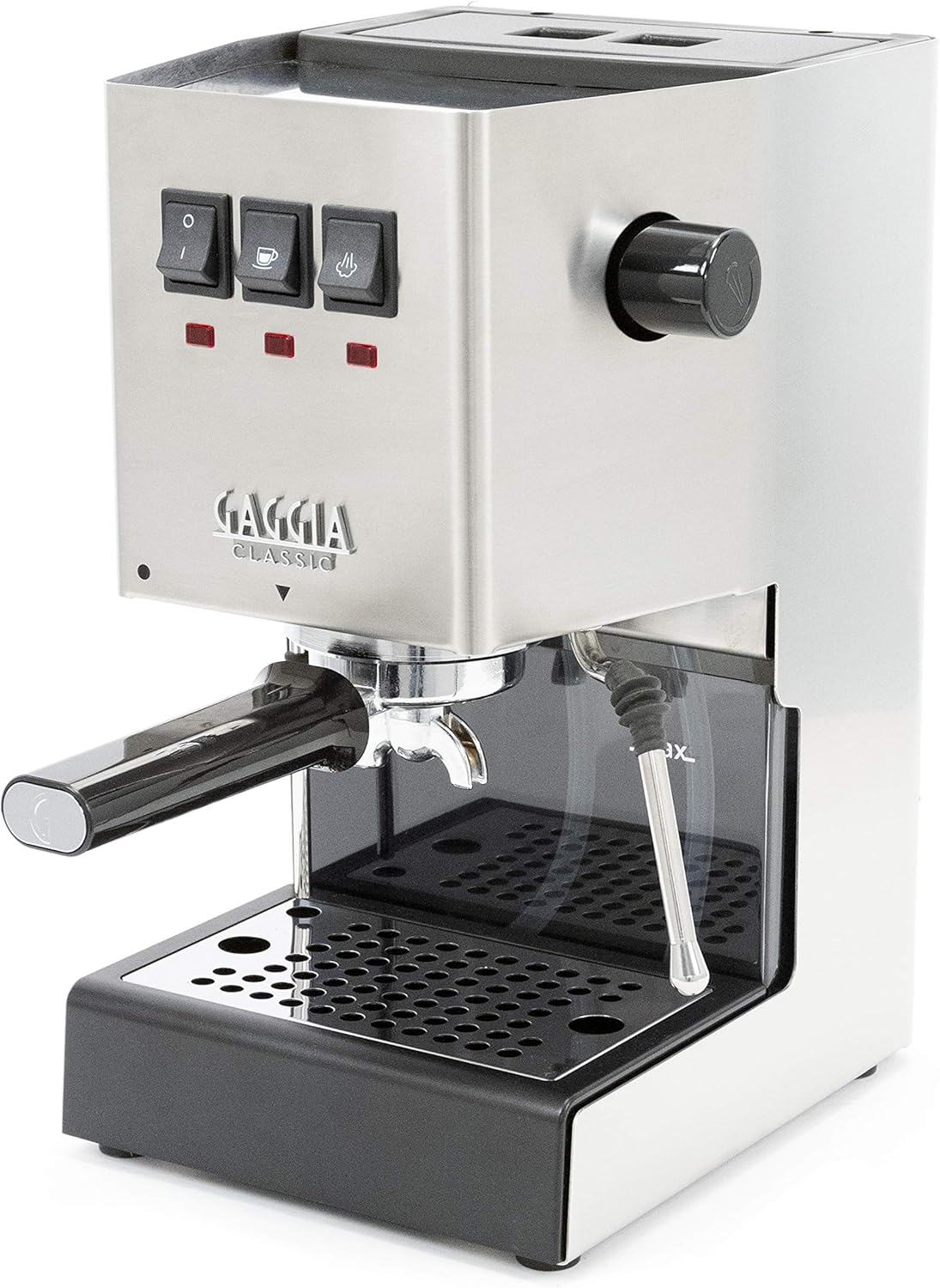
Gaggia RI9380/46 Classic Evo Pro Espresso Machine, Brushed Stainless Steel
Gaggia
- Commercial 58mm chrome-plated brass portafilter
- Three-way solenoid valve for dry pucks and quick reuse
- Stainless steel body manufactured in Milan, Italy
- Commercial steam wand with single-hole tip
Why we picked it: The Classic Evo Pro is the modder's darling — commercial 58mm portafilter and three-way solenoid in a compact stainless body that lasts decades.
3. Best Premium: De'Longhi La Specialista Espresso Machine with Sensor Grinder & Dual Heating System, EC9335M

De'Longhi La Specialista Espresso Machine with Sensor Grinder & Dual Heating System, EC9335M
De'Longhi
- Dual heating system for simultaneous brewing and steaming
- Built-in conical burr grinder with sensor-based dosing
- Smart Tamping Station automates puck preparation
- Active temperature control and pre-infusion
Why we picked it: La Specialista's dual boilers and smart tamping lever drop the learning curve for people upgrading from a pod machine.
The Comparison Table
| Pick | Brand | Product | Key spec |
|---|---|---|---|
| Best Overall | Breville | Breville Barista Express Espresso Machine BES870XL, Brushed ... | Integrated stainless steel conical burr grinder with 1/2 lb hopper |
| Best Value | Gaggia | Gaggia RI9380/46 Classic Evo Pro Espresso Machine, Brushed S... | Commercial 58mm chrome-plated brass portafilter |
| Best Premium | De'Longhi | De'Longhi La Specialista Espresso Machine with Sensor Grinde... | Dual heating system for simultaneous brewing and steaming |
What to Look For
Built-in grinder vs separate: machines with built-in grinders (Breville Barista Express, La Specialista) save counter space and simplify workflow. Separate grinders give you better burrs and more flexibility — but you'll add a meaningful sum to the bill for a quality grinder.
PID temperature control is the upgrade that matters most. Older machines (and budget machines like the original Gaggia Classic) have basic thermostat control with wide temperature swings. PID-controlled boilers (Classic Pro, Barista Express) hold ±1°C, which is the difference between a balanced shot and a sour or burnt one.
Steam wand quality is where cheap machines cut corners. A real "performance" steam wand articulates and produces dry steam that texture milk into microfoam. Panarello-style wands (some entry models) produce wet steam that creates bubbly foam, not the silky lattes you see in cafés.
Semi-Automatic vs Automatic vs Super-Automatic
The category splits by how much the machine does for you. Semi-automatic (you grind, dose, tamp; the machine pulls the shot) gives the most control and the best ceiling, and is where most enthusiasts land. Automatic adds programmed shot volumes. Super-automatic (bean-to-cup) grinds, tamps, and brews at a button press — effortless, but with less control and a higher price, and harder to repair. Beginners who want cafe-quality and enjoy the ritual want a semi-auto; those who just want good coffee fast want a super-auto.
The Grinder Matters as Much as the Machine
The most common espresso mistake is spending everything on the machine and pairing it with a bad grinder (or pre-ground coffee). Espresso needs a precise, consistent, very fine grind that you dial in by the shot — that requires a quality burr grinder, ideally one made for espresso. A great machine with an inconsistent grind makes bad espresso; a modest machine with a great grinder makes good espresso. Budget for both. See best coffee grinders.
Pressure, Temperature, and the 9-Bar Number
Espresso is brewed at about 9 bars of pressure and ~200°F. Beware machines advertising '15 bar' or '20 bar' as if more is better — that's the pump's max, not what's at the puck, and excess pressure is regulated down. What actually matters for shot quality is temperature stability (a decent boiler/PID) and consistent pressure, not a big bar number on the box. For the brand-level comparison, see Breville vs De'Longhi.
Buyer Scenario Decision Matrix
Stop comparing specs. Start with what you're actually doing, then the right product is obvious:
| Your Situation | Buy This | Skip This | Why |
|---|---|---|---|
| Most people — daily use, no compromises | Breville Barista Express Espresso Machine BES870XL, Brushed Stainless Steel | Premium-only sets you won't grow into | Integrated stainless steel conical burr grinder with 1/2 lb hopper |
| Budget-conscious or first-time buyer | Gaggia RI9380/46 Classic Evo Pro Espresso Machine, Brushed Stainless Steel | Premium upgrade you may not need yet | Commercial 58mm chrome-plated brass portafilter |
| Heavy daily use, splurge, or buy-once-keep-forever | De'Longhi La Specialista Espresso Machine with Sensor Grinder & Dual Heating System, EC9335M | Cheaper sets — you'll outgrow them | Dual heating system for simultaneous brewing and steaming |
Bottom Line: Which Should You Buy?
For most people: the Breville Barista Express Espresso Machine BES870XL, Brushed Stainless Steel. The Barista Express remains the all-in-one benchmark: integrated conical burr grinder, 15-bar pump, and a forgiving steam wand on one footprint.
On a budget: the Gaggia RI9380/46 Classic Evo Pro Espresso Machine, Brushed Stainless Steel. The Classic Evo Pro is the modder's darling — commercial 58mm portafilter and three-way solenoid in a compact stainless body that lasts decades.
Worth the splurge: the De'Longhi La Specialista Espresso Machine with Sensor Grinder & Dual Heating System, EC9335M. La Specialista's dual boilers and smart tamping lever drop the learning curve for people upgrading from a pod machine.
Ready to buy?
Jump straight to our top picks on Amazon — prices shown at click-through.
Frequently Asked Questions
Is the Breville Barista Express worth it?
Yes for anyone willing to learn espresso. The integrated grinder is good (not great), the steam wand is excellent, and the PID gives you consistent shots. The all-in-one design is what makes home espresso actually happen, vs sitting unused while you save up for a grinder.
Can I make café-quality espresso at home?
Yes, with a quality semi-auto machine, a decent grinder, fresh beans, and a few weeks of practice. The variable that matters most isn't the machine — it's the grinder. Grinding fresh, dialing in extraction, and getting steamed milk right takes 2–3 weeks of consistent practice.
How long do home espresso machines last?
10–15 years with proper descaling. The boiler is the part that fails first; gaskets and seals can be replaced indefinitely. Gaggia and Rancilio machines are particularly easy to service yourself, which is why they're popular with home enthusiasts.
What is the top-rated espresso machine for 2026?
Our top-rated pick is the Breville Barista Express Espresso Machine BES870XL, Brushed Stainless Steel. The Barista Express remains the all-in-one benchmark: integrated conical burr grinder, 15-bar pump, and a forgiving steam wand on one footprint.
Which espresso machine is best for beginners or a tighter budget?
The best-rated value pick is the Gaggia RI9380/46 Classic Evo Pro Espresso Machine, Brushed Stainless Steel — The Classic Evo Pro is the modder's darling — commercial 58mm portafilter and three-way solenoid in a compact stainless body that lasts decades.
What kind of espresso machine should a beginner buy?
If you enjoy the ritual and want cafe quality, a semi-automatic gives the best control and ceiling. If you just want good espresso at a button press, a super-automatic (bean-to-cup) is easiest. Budget for a good grinder either way.
Does a higher bar number mean better espresso?
No. Espresso is brewed at about 9 bars; '15 bar' or '20 bar' is just the pump's max and gets regulated down. Temperature stability and a consistent grind matter far more than the bar number on the box.
Want to dig deeper? See our guides to Best Drip Coffee Maker (2026), Best Electric Kettle (2026), and Best Cold Brew Coffee Maker (2026).