

A proper baked potato has two textures — crackling, salty skin and a steamy interior that falls apart into flakes — and the air fryer nails both faster than an oven and better than a microwave ever will. The method is almost embarrassingly simple: oil, coarse salt, 400°F, and patience. The two rules that matter: use russets, and never wrap them in foil. Here's the full technique plus the loaded-potato playbook.
Ingredients
- 2 russet potatoes (8–10 oz each), scrubbed
- 2 teaspoons neutral oil
- 1 teaspoon coarse kosher or sea salt
- Butter, for serving
- Optional toppings: sour cream, shredded cheddar, chives, crumbled bacon
Instructions
Scrub, dry, and poke
Scrub the potatoes under running water (a vegetable brush makes quick work of it — you're eating this skin), dry them completely, and poke each 6–8 times with a fork so steam can escape.
Oil and salt the skins
Rub each potato with a teaspoon of oil, then roll in coarse salt. The oil fries the skin as it cooks; the coarse salt seasons it and pulls surface moisture out, both of which drive the crackle.
Cook at 400°F for 35–45 minutes
No preheat needed for a cook this long. Place potatoes with space between them and cook 35 minutes for 8-oz potatoes, up to 45–50 for hulking 12-oz bakers. Flip once around the midpoint if you remember; it evens the browning but won't make or break anything.
Check for 205–210°F in the center
The done test: an instant-read thermometer reads 205–210°F at the center, or a skewer slides through with zero resistance. Undercooked centers read in the 180s and feel firm at the core — give them 5 more minutes.
Crack immediately and fluff
The moment they're done, cut a cross in the top and squeeze the ends to burst it open, then rough up the flesh with a fork. Opening it right away lets steam escape — trapped steam is what turns a fluffy interior dense and gluey. Butter first, then everything else.
Recommended Gear
The gear we'd reach for. Prices shown on Amazon at click-through.
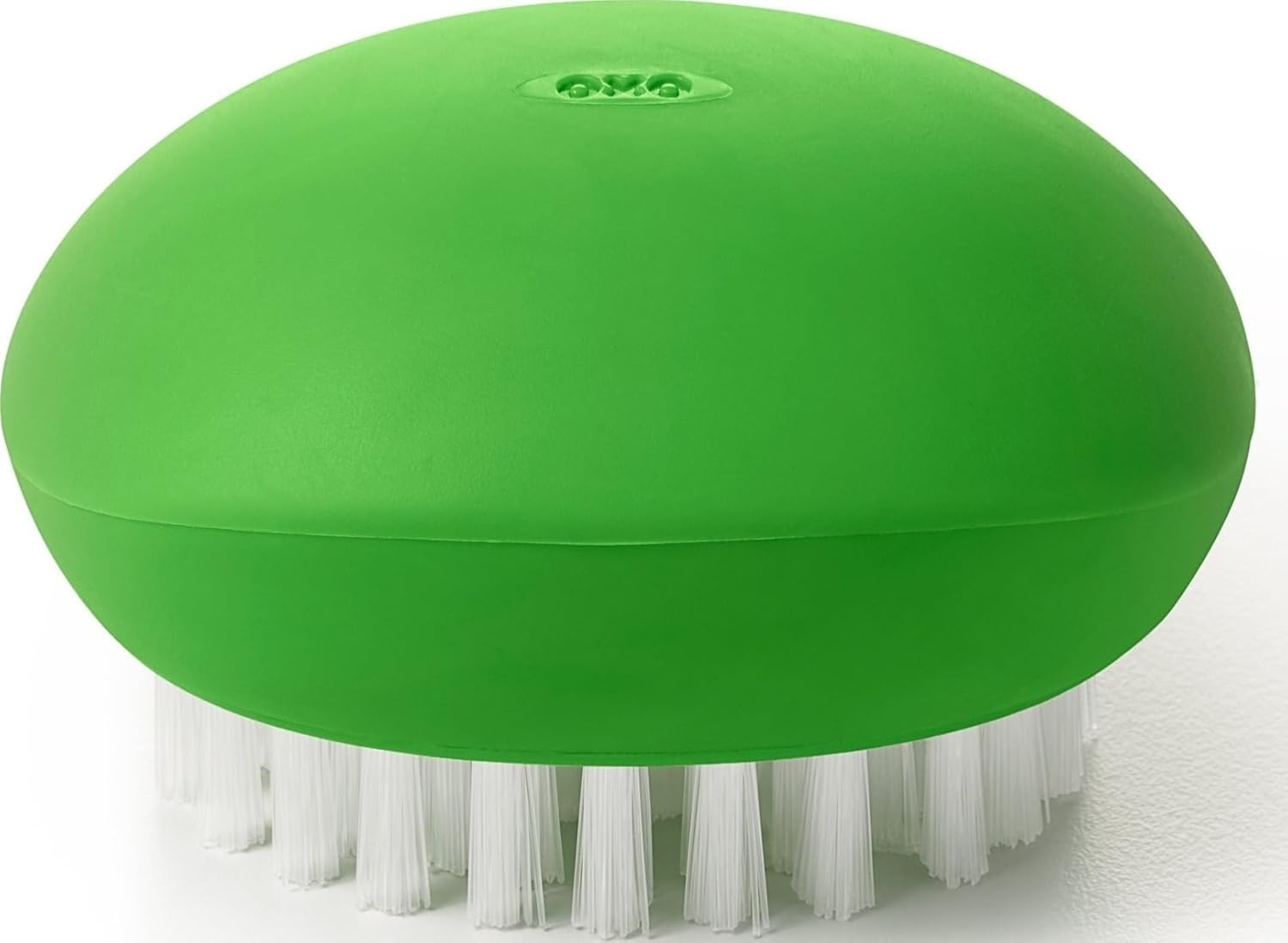
OXO Good Grips Vegetable Brush
budget
Since you eat the crispy salted skin on an air fryer baked potato, a proper scrub brush earns its spot.
Check Price on Amazon →
Microplane Classic Zester Grater
mid-range
Grates a fluffy cloud of cheddar or parmesan that melts instantly over a split, steaming potato.
Check Price on Amazon →Why russets — and why foil ruins everything
Baked-potato texture is starch science. Russets are high-starch, low-moisture potatoes; as they cook, their starch granules swell and separate into the dry, fluffy flakes you want, and their thick skins crisp properly. Waxy potatoes (red, fingerling) stay dense and creamy — great roasted, wrong here. Yukon Golds land in between: acceptable, but not that steakhouse fluff. As for foil: it turns baking into steaming. Wrapped potatoes trap their own moisture, so the skin comes out limp and the interior gummy — the opposite of everything the air fryer's dry, circulating heat is doing for you. The foil-wrapped steakhouse potato survives as tradition, not technique.
The loaded-potato playbook (and reheating leftovers)
A 40-minute cook window is enough to prep everything else. The classic build order matters: butter into the hot fluffed flesh first (it melts in and seasons the potato itself), then cheese while it's still steaming, then cool toppings — sour cream, chives, crumbled air fryer bacon — last. Broccoli-cheddar, chili-cheese, and Greek-yogurt-ranch all follow the same order. Leftovers: refrigerate whole, then re-crisp at 375°F for 8–10 minutes — the skin comes back to life in a way a microwave can't manage. Twice-baked potatoes are the best use of leftovers: scoop, mash with butter and cheese, refill, and run 6 minutes at 375°F.
Twice-baked, potato skins, and the breakfast move
The base recipe is also a factory for three upgrades. Twice-baked: halve the cooked potatoes lengthwise, scoop the flesh into a bowl leaving a ¼-inch wall, mash it with butter, a splash of milk, cheddar, and the scraps of anything good in your fridge, then refill the shells and run them at 375°F for 6–8 minutes until the tops brown. They freeze beautifully filled — cook from frozen at 350°F for 15 minutes. Potato skins: same halve-and-scoop, but brush the empty shells with oil inside and out and crisp them alone at 400°F for 5 minutes before filling with cheese and crumbled bacon — the pre-crisp is what separates bar-quality skins from soggy ones. Breakfast: dice one leftover baked potato, toss with a teaspoon of oil and a pinch of paprika, and air fry at 400°F for 8–10 minutes, shaking twice — because they're already cooked through, they only need to brown, which makes these the fastest crispy breakfast potatoes you'll ever produce. One warning born of experience: always cook an extra potato. The marginal cost is zero and the leftover uses are better than the original.
Frequently Asked Questions
How long does a baked potato take in an air fryer?
35–45 minutes at 400°F for typical 8–10 oz russets — roughly 20 minutes faster than a conventional oven. Very large potatoes can push past 50 minutes; the center should hit 205–210°F.
Should I wrap my baked potato in foil?
No — foil traps steam, which makes the skin limp and the interior dense. The whole point of the air fryer method is dry, circulating heat. Save foil for keeping a finished potato warm.
Do I need to poke holes in the potato?
It's cheap insurance. Trapped steam rarely bursts a potato dramatically, but it happens, and 6–8 fork pokes take five seconds. They also help interior moisture escape for a fluffier result.
Can I cook more than two potatoes at once?
Yes — as many as fit in a single layer with airflow between them. Four medium russets fit most 5–6 quart baskets. Add a few minutes and rely on the 205°F test rather than the clock.
Want to dig deeper? See our guides to Air Fryer Recipes: The 8 Staples Worth Mastering, Air Fryer Bacon (Crispy, No Stovetop Splatter), Best Air Fryer (2026), and Best Meat Thermometer (2026).